What is ARGUS?
ARGUS is a production readiness platformfor AI agent pipelines. It wraps your LangGraph (or any Python-based) workflow and watches every node execution, state transition, and tool call — then runs a multi-layered detection system to catch the failures that don't throw exceptions.
Your LangGraph pipeline runs. No exception. But three nodes later something crashes with a KeyError. The node that crashed didn't cause it — some node upstream returned a dict with a missing field, and nothing caught it. ARGUS sits between your nodes and catches silent failures, semantic degradation, and contract violations before they reach production.
The Problem
AI agent pipelines fail differently from traditional software. They don't crash — they degrade. A retrieval step returns irrelevant documents. A planning node generates a reasonable-looking but wrong plan. A tool call succeeds with bad parameters. The pipeline finishes, returns a result, and nobody knows it's garbage until a human reads it.
These are silent failures — the pipeline technically succeeds while the output quality collapses. Standard monitoring (latency, error rates, uptime) is blind to them. You need something that understands what your pipeline is supposed to do and can tell when it stops doing it.
How ARGUS Works
ARGUS wraps your pipeline with a single call and instruments every execution step automatically. No manual tracing. No decorators on every function. One wrapper, full visibility.
from argus import ArgusWatcher

watcher = ArgusWatcher()
app = watcher.attach(graph)         # StateGraph or already-compiled app
result = app.invoke(initial_state)  # persisted automatically
print(watcher.run_id)
All parameters are optional. Here's a full example with customization:
watcher = ArgusWatcher(
    graph,                           # LangGraph graph to monitor
    max_field_size=50_000,           # max chars per captured state field
    strict=False,                    # True = raise on detection (useful for CI)
    investigate=True,                # run root cause analysis on failures
    redact_keys={"api_key", "token"},# scrub sensitive fields from traces
    persist_state=True,              # save state at each step for replay
    record_http=True,                # record HTTP calls for mocked replay
    semantic_judge=False,            # enable LLM-as-judge evaluation
    judge_model="gpt-4o",           # model for semantic judging
    validators={
        "summarize": lambda o: (len(o.get("summary", "")) > 10, "Summary too short"),
    },
)
Runs persist when invoke() returns, including cyclic graphs. finalize() is optional and idempotent — not required in the happy path.
Key Capabilities
- ‣Silent failure detection— catches semantic degradation, hallucinated outputs, and logic errors that don't raise exceptions
- ‣Root cause analysis — traces failures back through the execution graph to the node that caused the problem
- ‣Execution replay — re-run any node with frozen upstream state. Only the target node onward re-executes with your fixed code.
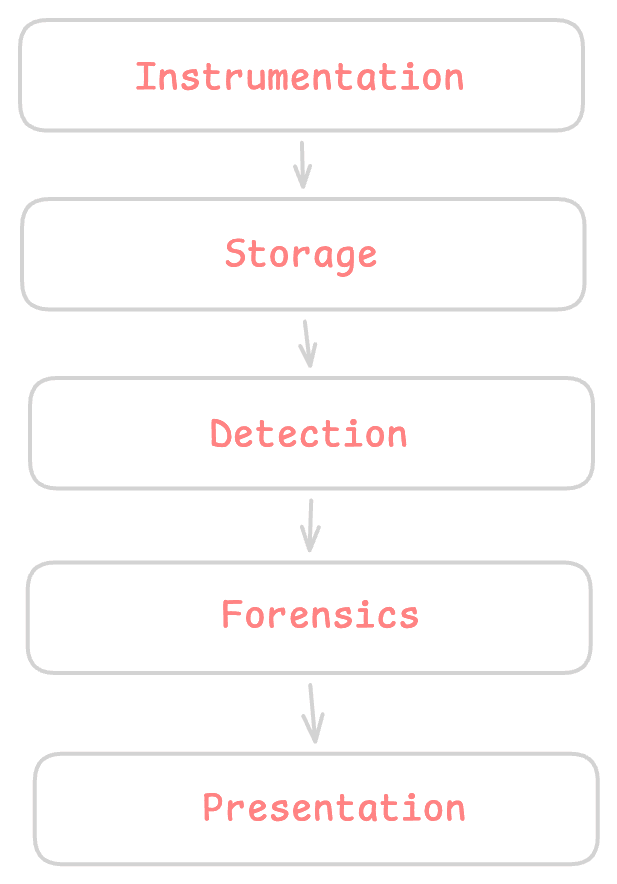
- ‣Four detection layers — heuristic engine (150+ signatures), anomaly detector, correlator, and LLM investigator
- ‣Zero-config instrumentation — one wrapper call, no decorators, no manual span creation
Who Is It For?
ARGUS is built for engineers shipping AI agent pipelines to production. If you're building with LangGraph, LangChain, or any Python-based agent framework and you need to know when your pipeline is silently producing bad output — ARGUS is for you.
ARGUS also works without LangGraph — use ArgusSession to wrap plain Python functions, Prefect tasks, or Temporal workflows.
Beta
ArgusWatcher. Join the Discord for early access and to shape the roadmap.Ready to try it? Jump to the Quickstart.